What Is Power Bank Sharing?
Power bank sharing lets you rent a portable charger at one venue and return it at another. Here is exactly how it works, and how it compares to owning one.

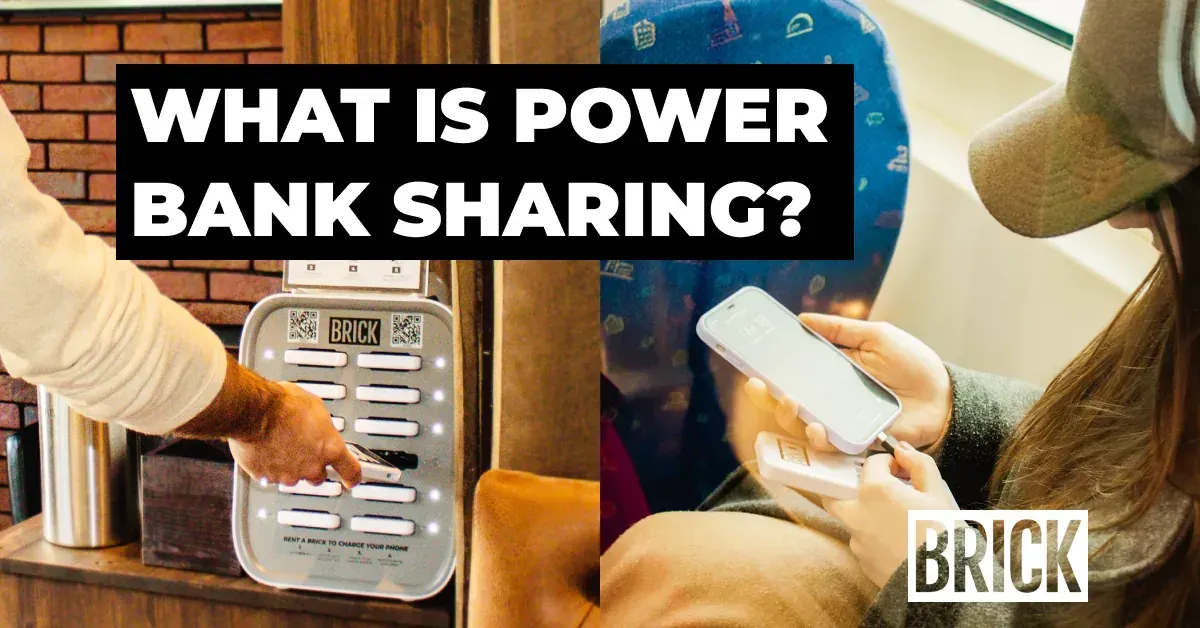
Power bank sharing is a rental service that lets you borrow a portable charger from a station at a venue, use it until your phone is charged, and return it to any participating station on the network, not necessarily the one you picked it up from. It works like bike-share or scooter-share, but for phone batteries.
How power bank sharing actually works
The mechanics are consistent across networks:
- Find a station. Stations sit at venues that already have foot traffic: bars, hotels, malls, transit hubs, festivals. Most run on a built-in SIM connection rather than needing the venue's wifi.
- Rent. Tap a card, scan a QR code, or use an app, depending on the network. A modern station takes payment directly at the unit rather than requiring an app download first.
- Charge on the go. The power bank comes pre-charged and cabled, so it works the moment it is released from the station.
- Return anywhere on the network. This is the part that separates sharing from a straight rental: return the power bank to any station in the network, not just the one you rented from. A traveler can pick one up at a hotel and return it at the airport.
What makes it different from carrying your own charger
A personal power bank has to be bought, charged in advance, carried everywhere whether you need it or not, and eventually replaced when its cycles wear down. Sharing removes all four of those obligations: nothing to buy, nothing to remember to charge the night before, nothing extra in your bag, and no aging battery to worry about, because the network handles maintenance and rotation of its own hardware. The tradeoff runs the other way too: sharing only works where a network has stations, so it suits venues and cities with real coverage, not a solo hiking trip.
Why it exists: low battery anxiety is real and measurable
Nearly nine in ten smartphone users report feeling panic when their battery drops to 20% or lower, according to LG's 2016 Low Battery Anxiety survey of 2,000 US smartphone users. That anxiety shows up as real behavior: people cut visits short, avoid ordering something else at a bar, or leave a venue early specifically because their phone is about to die. Power bank sharing exists to remove that specific friction at the exact place and moment it happens, rather than asking the guest to plan ahead.
Who actually runs and uses these networks
Brick operates power bank sharing across 25+ countries and roughly 4,000 venues, spanning hotels, bars, restaurants, retail and around 100 festivals, since launching in 2019. That range matters for the "who uses it" question: a guest at a bar in one city can end up returning the same power bank they rented at a festival in another country, because the network, not the venue, is what makes the return-anywhere model work. For the other companies that run networks across the continent, see power bank sharing in Europe: who runs the networks.
What a well-run network actually promises
The service only works if a guest trusts it enough to use it without thinking twice, which is why the operational details matter more than the pitch. Brick's own model runs on a 100% refund policy if anything goes wrong with a rental, a WhatsApp line to an actual person in the venue's own time zone rather than a ticket queue, and in-house technology rather than a patchwork of third-party vendors for payments and hardware. None of that shows up on the station itself, but it is what determines whether a guest's second rental happens.
Power bank sharing vs the alternatives
| Option | Upfront cost | What you carry | Coverage |
|---|---|---|---|
| Power bank sharing | None, pay per rental | Nothing until you need it | Wherever the network has stations |
| Personal power bank | $26-$200 one-time | Extra weight, always | Wherever you remembered to bring it, charged |
| Wall charging | Free, if you find one | Your own cable | Only where an outlet is free and accessible |
FAQ
Is power bank sharing safe for my phone?
Yes. Shared power banks use standard USB output and the same charging protocols as any certified charger; a network's own hardware is maintained and rotated rather than left to age indefinitely like a personal charger might be.
What happens if I don't return the power bank?
Most networks charge a fee or convert the rental into a purchase after a set period, rather than an open-ended obligation. Brick's own return policy and fee structure are covered in how to rent a powerbank.
Does power bank sharing work with any phone?
Yes. Stations carry standard cables (Lightning, USB-C, micro-USB) built into the power bank itself, so device compatibility is not something a guest needs to plan around.
How much does it actually cost?
Pricing is set locally by the network and often the venue, typically a per-interval fee with a daily cap. The full breakdown is in how much does a power bank rental cost.
Is renting always better than owning a power bank?
Not always. Frequent travelers or people without reliable access to a network's coverage area are often better off owning one. The tradeoffs are broken down in renting vs buying a power bank.
Power bank sharing is one part of the broader sharing economy, the same rent-what-you-need logic behind bike-share and scooter networks, applied to phone batteries. See where venues actually place power bank stations for the venue side of the model, or visit brick.tech to find a station near you.